

Watercress: Peppery Leafy Green Packed with Vitamin K & Nitrates
Gram for gram, watercress tops the CDC nutrient‑density list—delivering vitamins K, C and peppery punch at just 11 calories per cup.
0.0(0)
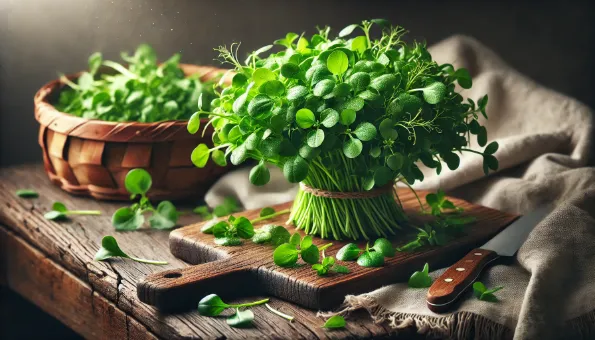
What Is Watercress?
Watercress (*Nasturtium officinale*) is a semi‑aquatic crucifer that grows in cool, running water. Its small dark‑green leaves offer a sharp, mustard‑like bite that livens up salads, soups and sandwiches.
Nutrition Snapshot (per 100 g raw)
| | Amount | %DV |
|---|---|---|
| Calories | 11 kcal | — |
| **Fiber** | 1.5 g | 5 % |
| **Vitamin K** | 250 µg | 208 % |
| **Vitamin C** | 43 mg | 48 % |
| Vitamin A (RAE) | 160 µg | 18 % |
| Folate | 9 µg | 2 % |
| Iron | 0.2 mg | 1 % |
Phytoactives: **glucosinolates, lutein, nitrate (~250 mg/100 g)**.
Potential Benefits
- **Bone health:** vitamin K supports osteocalcin activation.
- **Cardiovascular boost:** dietary nitrate may improve endothelial function and lower blood‑pressure during exercise.
- **Cancer‑protective compounds:** glucosinolate derivatives (PEITC) help phase‑II detox enzymes.
- **Ultra low‑calorie bulk** for weight‑management dishes.
Drawbacks & Precautions
- Very high vitamin K can interfere with warfarin—patients should keep intake consistent.
- Raw leaves from contaminated streams may harbour *E. coli* or liver flukes—buy farmed or wash thoroughly.
- Strong flavour can overpower delicate dishes; use moderation.
Culinary Uses
- Blend into **watercress pesto** with walnuts & lemon.
- Toss fresh leaves into egg salad or sushi rolls for pepper kick.
- Classic **cream of watercress soup**: sauté shallots, wilt greens, blend with stock & potatoes.
- Wilt lightly at the end of stir‑fries to preserve nutrients.
Storage Tips
Keep stems submerged in cold water in the fridge or wrap in damp paper towel inside a vented bag; best within **3–4 days**. Blanch & freeze purée for sauces up to 6 months.
Sustainability & Farming
Hydroponic watercress requires little fertiliser and can be grown in vertical systems. Wild harvesting should avoid disrupting stream banks and downstream ecosystems.
Key Takeaways
✔︎ Nutrient‑density superstar (K, C, nitrates)
✔︎ Peppery flavour lifts bland meals with minimal calories
✖︎ Monitor intake if on blood thinners, wash well.
References
1. CDC Nutrient Density List (2024)
2. Lidder S. *J Nutr.* (2023) nitrate & BP study
3. USDA FDC ID 11591 (2024)
- 1. Watercress
Watercress
Comments
Povezani postovi
Watercress: Peppery Leafy Green Packed with Vitamin K & Nitrates
Vitamin CVeganWeight Loss
Bison Meat: Lean, Nutrient-Dense Red Meat
VeganImmunityHealthy Fats
Bone Broth: Slow-Simmered Collagen-Rich Stock
VeganImmunityHealthy Fats
Coconut Flakes: Crunchy, Tropical Topping
VeganImmunityHealthy Fats
Currants (Black, Red & White): Tart, Juicy Vitamin C Powerhouses
VeganImmunityHealthy Fats
Guajillo Peppers: Fruity, Mild-to-Medium Dried Chilies
VeganImmunityHealthy Fats
Sticky Rice (Glutinous Rice): Perfectly Chewy, Sweet or Savory
VeganImmunityHealthy Fats
Matcha Powder: Antioxidant-Rich Green Tea Boost
VeganImmunityHealthy Fats
Enoki Mushrooms: Delicate, Noodle-Like Mushrooms for Soups & Stir-Fries
VeganImmunityHealthy Fats
Split Peas: Protein- & Fiber-Rich Legume for Soups & Stews
VeganImmunityHealthy Fats